Friday, 25 October 2013

Are female professional athletes being short changed?

A post by Shannon:

For many of us who work in the corporate world, we are familiar with the concept that we are remunerated in return for our effort and sometimes based on our performance (for example, commission payments). But it seems as though these are not the only factors that determine salaries for professional athletes.

I refer, of course, to the general imbalance between remuneration for male professional athletes compared to their female counterparts. It raises the question: should professional athletes be paid in recognition of their effort and performance? Or is the financial reward always going to be influenced by the popularity of the sport, and the participant.

Recently, Lance (Buddy) Franklin was reportedly offered a $12m six-year deal with the Greater Western Sydney AFL team, plus a healthy top up if he agreed to take on an Ambassadorial role with the club (Ralph: 2013). Franklin was to receive these payments irrespective of his own personal performance or that of the team. Compare this to the average wage paid to a netball player competing in the ANZ National Championship, which is just $21,800 per year, excluding sponsorship and endorsements (Partland: 2013). This example is just one of many that highlight the enormous gulf between salaries paid to male and female professional athletes.


Picture source: Wayne Ludbey

Wikipedia defines professional sports as ‘sports in which athletes receive payment for their performance’. Therefore, the athletes that compete in professional sports are classified as professional athletes. Note the use of the word ‘performance’ in this definition.
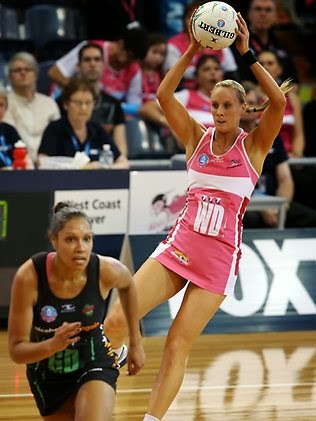
Most of the ANZ Championship netballers have now made the transition from semi-professionalism and are classified as professional athletes. While, on average, the salaries paid to the netballers are relatively meager, this transition provides another advantage. It frees up time, which may have previously been spent engaged in paid employment and can now be dedicated to training. Professional netball players are expected to train six to seven times per week (as well as match play), which is about double the effort that was required prior to the transition (ANON: 2011). In terms of effort, this puts the ANZ Championship netballers on par with their AFL or NRL compatriots.

Picture source: Sarah Green

The Australian women’s cricket team, the Southern Stars, is currently ranked number one in the world. They clearly outperformed the men’s cricket team, who returned home from England not long ago after a disappointing Ashes series. To reflect their status as ‘world beaters’, the top Australian female cricketers received a significant pay rise in May 2013, and now take home up to $80,000 per year (Jarvis: 2013). While this means that remuneration has more than doubled for the women, there is still a vast disparity between this and the current minimum wage of $230,000 for a male cricketer who is contracted to Cricket Australia (Partland: 2013). In terms of performance, not only do the women match the men, in some cases they even exceed them.


Picture source: Quinn Rooney 

So it seems that remuneration for professional athletes is significantly impacted by, and linked to, the popularity of a sport and the individual participants. And there is an argument that this should be the case. Sports is big business, and revenue in sport is driven by media exposure and ticket sales. Sponsors want to align themselves with, and advertise during the most popular sports. A report commissioned by the Women’s Sport and Fitness Foundation showed that for every $100 spent on corporate sports related sponsorship, only 50 cents was invested in women only sports. Perhaps even more shockingly, the Australian Sports Commission’s 2010 report showed that only 9% of sports news coverage was dedicated to women’s sport – horse racing received more airtime! (Go: 2013).
From an equality viewpoint, female professional athletes absolutely deserve to be paid the same as the men. Women competing professionally in individual and team sports have demonstrated time and time again that they can match it with the men in terms of effort, and often outshine the men in terms of performance. However, commercially, they fall behind, and until this is rectified female athletes will always be paid significantly less than men.  
So, in order to increase remuneration for our women in sport, we need to increase the crowds and the sponsors. And in order to increase these two components, greater media exposure and attention is required. There is plenty to promote about women’s sport. By and large, female professional athletes portray a clean and rule abiding image. To date, none have been implicated in the ASADA peptides scandal that has infiltrated two major football leagues in Australia. None were embroiled in ‘Mad Monday’ celebrations that went awry. And none have had their contracts terminated due to binge drinking encounters.
While it is pleasing that Australia seems to be one of the more progressive nations in attempting to bridge the gap between remuneration for male compared to female professional athletes, there is still a long way to go. Until then, women will continue to participate in sports at a professional level, motivated by the love of competition and participation.

References:
Australian Sports Commission. <http://www.ausport.gov.au/>. Viewed 26/10/13.
ANON. 2011. Netball Australia. <http://www.netball.asn.au/extra.asp?ID=11676>. Viewed 10/09/13.
Coakley, J., Hallinan, C., Jackson, S., &amp; Mewett, P. (2009). Sports in Society: Issues and Controversies in Australia and New Zealand. Australia: McGraw Hill.
Jarvis, Jo. 2013. ABC News. <http://www.abc.net.au/pm/content/2013/s3764229.htm?site=widebay>. Viewed 10/09/13.
Women’s Sport and Fitness Foundation. <http://www.wsff.org.uk/the-challenge/the-challenge-elite-sportswomen>. Viewed 26/10/13.

Alternative Marketing and Promotional Strategies

A post by Natasha -


Alternative marketing and promotional strategies

-          The first thing we need to see is a culture shift! Society needs to accept the fact that while in our grandparents and maybe even parents younger days, women didn’t play sport, more and more females are starting to participate. Not only this but the fact that more traditional ‘gender specific’ games are going out the window and females are beginning to become more involved with what are classified as ‘typically male sports’.

Government

Example of Title IX in America and its changes to the sporting system. One major thing that has affected the culture and collegiate sporting system in general in America is Title IX. It is a law that was passed in 1972 and means that for collegiate athletics departments that received government funding must ensure that the number of females participating in organised sport and the number of organised sports must be equal for both males and females. Title IX has a lot of critics in all circles of sport, saying that it unfairly reduces opportunities for male athletes. However, this is not true. It is dependent on the school and athletics department that are implementing this law. The schools that are doing this well will, rather than reducing the number of male athletes and programs, increase the number of opportunities for female athletes. Some good examples are at the University of Northern Colorado. They have the second best soccer field in the state and it is used solely for the college women’s soccer team. Also, while renovating, they added change rooms and lockers for the women athletes who previously had nothing.

Good example of what they have started to do. About Time report, a total of 18 recommendations http://www.regional.gov.au/sport/resources/reports/women-in-sport.aspx

Currently, a total of 24 sports are working to achieve participation outcomes with under-represented population groups and 11 national sporting organisations have been funded to support initiatives to increase participation by women. The 11 that have specifically identified women as a targeted population for additional assistance within their participation growth strategy are:

1.Australian Football League

2.Netball Australia

3.Basketball Australia

4.Australian Rugby League

5.Bowls Australia

6.Australian Rugby Union

7.Cricket Australia

8.Tennis Australia

9.Football Federation Australia

10.Touch Football Australia

11.Hockey Australia.


To celebrate Australia's achievement in women's sport, the Australian Government has committed to sponsoring the Women's Health, I Support Women In Sport Awards, which will recognise our elite sports women, as well as the achievements of our hometown heroes, women in leadership positions and service to sport. In addition these awards will also include the reinstated Prime Minister's Sportswoman of the Year award. But you wouldn’t know who won these because of the lack of coverage!! (Alicia Coutts, Anna Meares, Steph Gilmore, Sally Pearson and Sam Stosur nominated. Notice anything? All individual athletes)

The ASC has 2 x programs (sport leadership grants for women and women in sport leadership register) recognising that sport is a great way for women to prove their worth. Studies show that businesses where women hold at least 30% of the senior management positions are significantly more successful and better able to deal with future challenges than those without. The grants provide women with opportunities to undertake training to reach their leadership potential within the industry as coaches, officials and administrators. The register is to assist the placement of women on boards and in executive positions where they can apply their training and experience to benefit Australia’s sporting system. There are many qualified, talented and experienced Australian women with the ability to positively contribute to the governance of organisations, however, have had limited opportunity to be considered for a senior position or a directorship. Sports organisations have also reported that they would like assistance in sourcing talented females for consideration for leadership positions.

Media

One way the media can improve the promotion of female sports is advertising and the way they advertise. I will show a comparison of typical men’s and women’s promotions, first looking at the AFL and then the newly formed ANZ Championship Netball:


http://www.youtube.com/watch?v=STBgFqxVXKk&feature=related ANZ championship opening 2011 – Who is going to be taking this seriously?

A good example of how they should be marketing women’s sport is this ad from the 2010 ANZ championship, which seems to give off the idea that we are not making any moves into equal coverage for men and women, given the previous ad was from 2011.  http://www.youtube.com/watch?v=Dp4_jDOL2Oc&feature=related ANZ championship 2010 ad

Another easy change for the media is to start focusing on the athletic credentials of these female athletes rather than their looks or personality. There are some incredible female athletes out there that have made significant achievements both as individuals and teams, and you don’t hear about some of them because they aren’t high profile sports.

Entrepreneurs

Unfortunately there is a vicious cycle – these female sports are low profile without the media attention but they cannot get this media attention until they are high profile. How can you expect a sport to go massive without the funding of entrepreneurs or business-people? This is where there will be a massive advantage if we can start to get more females on boards, hopefully they will have to sway to take the chance. A recent example of this is netball’s switch to a new form ‘Fast 5’s’. This is like the netball version of T20 cricket. We see the removal of 2 players per team, a 1 point, 2 point and 3 point shooting area, the introduction of power plays with double points, and unlimited interchanges, all of which make the game incredibly fast! Not only the sport, but the entertainment that was held over the 3 day tournament, the off-court enthusiasm of the players and the skill levels of the players made for an amazingly exciting brand of netball! But of course you wouldn’t of heard about it because it is a women’s sport and received coverage on pay television, where they could be fit in, in between replays of old NRL games and tennis matches. You would think with the majority of the sporting viewing audience, that they would be looking to appeal to the female audience to take this further. 


Tuesday, 22 October 2013

Women in the Media

A post by Natasha -


Women in the Media

The role of women in sport, and indeed society, has changed, but there is still a long way to go! International Women’s Day is celebrated on the 8th of March every year and Sport for Women Day is celebrated in the last week of February every year. The fact that we need to have a day and a week dedicated to women shows that the role of women is largely undervalued. I want to discuss the difference between the way that male and female athletes are treated and portrayed.


Women are more often than not steered towards individual activities such as gymnastics, dance and figure skating, where men commonly participate in aggressive, competitive, physically demanding team sports such as football (Giuliano, Popp and Knight, 2000). The type of coverage also differs greatly for females when compared to that of males in terms of descriptors used and language (Kane 1988). Specific descriptors used when talking about athletes vary greatly between genders. Female athletes are commonly referred to by their first names, which presents them as soft and girly, whereas men are identified by their last name, which makes them sound more powerful and imposing.

Language used also makes perceptions of an athlete’s physical ability differ, depending on the words chosen to represent an action. For example, a male athlete would ‘miss-fire’ when taking a shot in basketball whereas a female would just miss. Similarly, if a male were to ‘crash’ against the defence of a tackle, a female would simply ‘move against’ it. Another fault of the type of media coverage female athletes receive is that of task relevance. Achievements are often downplayed, or omitted, which would suggest that the sporting accomplishments of female athletes are of little importance. This issue is further escalated with the addition of images to print media. Images that are chosen to accompany articles are usually very sexualised images, most often with very little to do with the sport itself, and rather just about the attractiveness of the athlete ( Giuliano, Popp and Knight, 2000). Images of men are most commonly ones taken during a game, portraying the courageous and strong side to the male, when compared to women’s imagery in the print media is more of the glamour shots, posed to be raunchy rather than action shots. Another discrepancy between male and female athletes in the print media is the display of emotions (Duncan, 1990). Pictures of female athletes crying after a loss or an injury are regularly seen, whereas when a male is seen crying it is seen as a sign of weakness, and he is taunted or called ‘a big girl’. When being talked about in print media, a female may have been ‘crying with disappointment’, whereas a male would only ‘shed a tear’.

And what is lacking in quality is certainly not made up for in quantity. Whilst studies report that there has been an increase of female newspaper coverage by 500% from the late 1980’s, when you look further into the issue, the figures have risen from a mere 2% of newspaper coverage to 10.8% (Wensing and Bruce, 2003). Disgusting when you think that horse racing alone makes up more percentage of the coverage than all female athletes. So how do we expect to have aspiring Olympic and international female athletes, when they are given no coverage at all, and the ones that are get portrayed in another light?


In research I completed in Canada and America in 2013, I collected information from Canada’s ‘National Post’, ‘The Seattle Times’, and ‘The Denver Post’, all during the Olympics. Data collected included number of male, impartial and female articles, size and location of all articles, the use of images, and key language and descriptors in each article. Results were significant, but not surprising. As can be seen in the graph below, women’s articles made up 5.26%, 6.6% and 7.41% respectively of all sports articles in the newspapers. The Denver Post, which contained the most female articles, with 4, places one article on the back page, 2 more on the page back from that and the last a page from that, making the article the closest article to the front of the section appearing on the 6th page. These articles are all located on the side or the bottom of the page, with the largest being a quarter of the page at most. 3 of the 4 articles contain pictures, the first a colour picture of gymnast Jordan Wieber crying, the second a colour picture of swimmer Missy Franklin diving in the start of her backstroke semi final and the third a black and white picture of swimmer Dana Vollmer celebrating her world record. None of the photos from any of the newspapers contain any competitors and only one of the photos contain the sport actually being performed.


There is a massive culture change required in society for female athletes to be able to feel comfortable in the sporting arena, and this has to come soon. Why should females be treated any differently to male athletes? Why do we need to have ‘male’ and ‘female’ defined sports? Shouldn’t anyone be able to play any sport they like without being judged and criticised? I am sick and tired of females being under represented and treated unfairly in the sporting arena, when you cannot chose your gender, but these women are out there giving 100%. It is time for things to change!

Monday, 21 October 2013

Women's Sport in the Media


A post by Beth

Last night while watching the ABC news I was pleasantly surprised to see three stories about women’s sport! Samantha Stosur won her semi final match against Russia's Svetlana Kuznetsova during the Kremlin Cup putting her through to the final, the Australian Diamonds Netball team finished their international season with a win over Malawi on the Goldcoast and the Canberra Capitals basketball team, though they didn't win their match were also mentioned. When most nights it is all about men's sport and what is going on in their world to have three women's teams/events mentioned on one night is much, much more than the normal amount of representation women receive.

Women's sport is extremely underrepresented in the media compared to men's sport. Everyday you hear about or watch the success and failures of the various men's sporting teams or events active at the moment, cricket, soccer, motor bike racing, golf, rugby, AFL but do you hear about the women's teams? To quote an article I read recently "Socceroos in 6-0 loss!, Socceroos in 6-0 loss!. (Yes twice.) But did you know Sam Stosur won the Japan Open?" (Kathryn Wicks, 2013). We hear about the failures of our men's teams to great effect, plastered all over the news, but what about the successes of our women sporting champions? Though it was some months back the men's Tour de France cycle race was played on SBS every day for the full 3 weeks of the Tour but what about the women's Tour de France? They put in as much effort to training and racing as the men do and yet we hear nothing about them.

As well as not being equally represented in news reports on TV or the paper and allowing Australia to hear about their achievements women's sport games and events are not televised to the same extent as men's sport either. Every week during the footy and AFL seasons there would be at least one game if not more played on the Freeview TV channels. In comparison the women's National Netball competition was broadcast on Fox Sports with all 69 of their games which is fantastic but only for the people who have pay TV. SBS 2 also broadcast the Match of the Round on Sunday afternoons and the finals games. So one game per round compared to multiple football games. It's all very well for people who have pay TV but what about all the netball fans who want to watch each game but can't because broadcasters don't want to have TV that doesn't attract enough of an audience to warrant them buying the rights to broadcast? Another quote from the article reflects this "broadcasters and sponsors are not going to climb aboard anything unless there is an audience" (Kathryn Wicks, 2013). So how do we gain a better audience for women's sports?

It has long been said that women's sports are not as exciting as men's and that is why they don't have the same representation in the media, they don't have an audience so television channels don't want to waste money or broadcasting something that "people won’t watch". So to make them more exciting for men what should we do? Dress our female sports stars in all sports in bikini's? The men might cheer but I highly doubt women will. Women are already put under enough pressure to have the stereotypical ideal body shape. By actively focusing on women's bodies to gain audience attention rather than their skill on the field is an insult to women's sporting abilities. People should want to watch the game or event for the sport not the bodies on display.

In these times the media has so much of an influence on how people perceive things that until a more positive representation of women is seen in the media the level of interest in women's sport may stagnate and not improve. The pictures the media paints of women's sport shape the thoughts and attitudes of society in general. The representation of women’s sport in the media has improved but it still has a long, long way to go before it is even close to being on an equal playing field with men’s sport.


References

Wicks, K, (2013, October 17), World Cup the key as time-poor mums struggle to catch up with women’s sport, The Sydney Morning Herald, p 20

ANZ Championships, (2013), Broadcast details, http://www.anz-championship.com/Matches/Broadcast

Thursday, 17 October 2013

Sexualisation in Women's Sport

A post by Natasha -


Sexualisation in Women’s Sport

Sport has so much to offer each and every person, and the best thing about sport is that it doesn’t discriminate; there is a sport out there for everyone, from a beginner to an elite athlete. Sport knows no boundaries, each sport requires different skills and personality traits, and attracts different spectators. It brings people together to share what has enriched their lives, and it teaches you to believe in yourself. But the people that play, watch and govern sport can tint the otherwise glossy nature of sport. There are a number of factors that make sport unenjoyable, difficult and confidence-breaking.


Why is this happening?

-          A 1996 Survey “An Illusory Image” states that ‘consistent media coverage can benefit a sport in a number of ways. It can provide a visual profile, create positive role models and, by increasing spectator appeal, help attract lucrative sponsorship opportunities for the sport’. The 1996 survey took a snapshot of media coverage of women’s sport from newspapers, magazines, radio and television stations during a 2 week period. The good news to come from the paper was that the newspaper reportage of women’s sport had recorded just over 500% increase from the first study done in 1980. The deceit here is that the 500% was because the coverage of women’s sport had risen from 2% to 10.7%. (http://www.ausport.gov.au/participating/women/resources/issues/media)

-          It is not only the quantity of women’s coverage that is lacking, when they are given the stories, they suffer from poor placement. In newspapers, positioning is often placed on the bottom of the pages, or in the inner, least accessible pages of the newspaper. Female sports stories are feature at the end of news/television segments.

-          Another injustice for female athletes is the language and descriptors used when they are given coverage. Language used also makes perceptions of an athlete’s physical ability differ, depending on the words chosen to represent an action. For example, in the article about Jordyn Wieber, American gymnast, she ‘failed’ to qualify, whereas the USA men’s swimming relay team simply ‘didn’t have enough left’ to beat France in the hunt for a gold medal. Similarly, if a male were to crash against a tackle in football, a female may simply move against the defence. Sporting achievements are often downplayed or omitted.

MISSION STATEMENT
"The Lingerie Football League has become the Ultimate Fan-Driven
Live Sports Phenomenon - Blending Action, Impact and Beauty."

Where has sexualisation worked as a business model?


The Lingerie Football League is a prime example of this. In the inaugural 2009-2010 season, ten teams competed in the season and it was aired on some local television stations. In the next season, MTV2 licensed the rights to broadcast the games, and  two highlight programs. In 2012, plans were made to design and develop the official LFL gaming platforms. The league is now expanding into other countries, with Canada adding 4 teams to the American competition, and leagues about to be launched in Australia and Europe. In 2014, the league also plans to have the champions of each of the leagues compete in the inaugural LFL World Bowl (http://www.lflus.com/ ). The below quote sums up people’s attitudes to women’s sport pretty accurately.

“The lingerie football league is a rarity in sports – a women’s professional league that is actually growing.” Business week’s Paul Wachter.


Uniforms – Are they actually performance enhancing or is it just a case of sex sells?

-          Beach volleyball protocol:

o   In accordance with the FIVB Athens 2004 protocol, women must wear either a two-piece in accordance with the diagram, clearly stating that briefs are to be no more than Max 7cm at hip, or a one piece closely fit to the design of the two-piece. (http://www.fivb.org/EN/BeachVolleyball/Rules/BVB%20Uniforms%20OG%202004.pdf )


o   These are some comparisons of Australian Olympic uniforms, for men and women. Surely if the players choose to wear something baggy then that will be their own downfall, why should they be made to wear something so tiny? And clearly it doesn’t impact the sport that much if the men are able to play in it. This has now changed and female athletes are allowed to choose shorts should they prefer.

-          In these examples you can see the men wear loose clothes, whereas the women are in tight, figure-hugging clothes that don’t hide a thing. Other national sports include:

-          Hockey:


-          Touch Football:


-          Tennis:


-          Basketball is an interesting one. After years of the men’s national team wearing traditional baggy uniforms and the women’s national team wearing figure-hugging bodysuits, this year’s Olympics saw the females finally change back to the traditional uniform. This switch, however, was player lead, as they pushing for the change. The Australian’s since the 2008 Olympics ‘have been lobbying for uniforms that decrease rather than encourage the perve factor.”


Involuntary Sexualisation

·         Women are more often than not steered towards individual, aesthetic activities, such as gymnastics, dance and figure skating, where men commonly participate in aggressive, competitive, physically demanding team sports such as football. This gender-role variation is not viewed in a positive light by society, rather they pretend it does not exist by not covering it in the media. Weatherington and Cotrell (2008) found that females participating in ‘masculine sports’ were viewed as less likeable and less respected than those considered to be participating in feminine sports. This then leads to the term known as ‘Female apologetic’. It is where individuals make an exaggerated effort to manage their appearance to look more feminine and therefore more ‘straight’. This is to try and compensate for the fact that they play ‘a man’s sport’. This then results in the voluntary sexualisation of the female athlete to prove their feminine qualities.


·         Media driven through the use of suggestive pictures. Image use and task relevance is important here. Images that are chosen to accompany articles are usually very sexualised images, most often with very little to do with the sport itself, and rather just about the attractiveness of the athlete. Images of men are commonly action shots, taken during a game and portraying the courageous and strong side to the male, where as the women’s image which is more of a glamour shot, is posed to be raunchy rather than action shots. Shots from the sport itself are generally of the female alone, having omitted the competitors and sporting equipment.

o   Here are examples from Hockey, netball, basketball – where the players are in full stretch, and the angle either looks down on them or tries to flaunt their assets.


o   Beach volleyball examples, taken straight from the websites and news articles they were used for, no editing or cropping.


Finally, the biggest way that the media and sporting organisations can alternatively promote and market their sport is to use the sport itself!! Even if the sexualisation draws attention to the sport, they still have to be able to keep the viewers, so what better way than to give the viewer what they will get! Each sport contains a large amount of talent and athleticism, so why not use this to promote it!!

Saturday, 5 October 2013

Roxy - All Sex, No Surf!


A post by Katie


Many of you would have noticed the controversy surrounding the recent Roxy surf ad, featuring Stephanie Gilmore. The ad, shown above, does not feature surfing, but features sexy shots of the young, attractive surfer. Shapely figure, sheer white shirt, shower scene, long legs stepping out of a car,  a focus on her bottom in short denim shorts as she looks out on a beach – not anything I associate with surfing (and considering the lack of time spent in clothes, I get no sense of a clothing commercial either).

Former pro surfer, Cori Schumacher, has spoken out against the advertisement, accusing it of being “not conducive to a healthy, empowered vision of women.” (Schumacher, 2013), however the father of Stephanie Gilmore doesn’t see what the fuss is about stating, “"If Roxy and Steph can get more people to watch women's surfing, then it's a good thing." (Mortimer, 2013)

So what is the big deal about sexualising women in sport, it’s certainly nothing new. Before we answer this question, we must first examine gender ideology. Gender ideology is the ideas and beliefs about masculinity, femininity and male-female relationships. It defines what it is to be a man or woman and evaluate and judge people and determine what is considered natural and moral when it comes to gender (Coakley, Hallinan, Jackson, & Mewett, 2009). Traditionally, men are seen as strong, courageous and tough, while femininity values beauty, grace and poise. Sport has historically been a male’s domain, and it seems that many wish to keep it that way. The rampant sexualisation and focus on appearance of women in sport, shifts the focus from their physical power and ability and minimises the symbolic threat sportswomen pose to male power and dominance (Wenner, 1998).

This is a difficult topic as sport is big business. Much of an athlete’s salary comes from sponsorships and endorsements. Revenue from sports, and sponsorship opportunities, comes from media exposure. Many cannot see past the traditional ideals of women, and the desire to sell women’s sport as an opportunity to ogle, to show the power, strength and talent demonstrated by women’s sport. 

Media coverage of women’s sporting events proves further that women’s sport is a focus on the sexual appeal of the women. Consider the coverage of the Olympic Games, an event that showcases the best men and women in the world, in their specialized events. A study of the 2008 Olympic coverage showed that 46.3% of sports coverage was women’s sporting events, with 97% of this coverage focusing on the six sports offering the most sex appeal for male audiences. Even worse, one study found that 37% of close up shots were focused on a woman’s chest or bottom.  (Kian, Bernstein, & McGuire, 2013) This statistic is a disgrace, making the Olympic team is a massive achievement, and the focus should be on a woman’s ability, just as it is for a man.

It is easy to see why Roxy would take the easy way and use sex to market a product and a brand. However, it needs to stop. Girls need to know they can be athletic and strong and powerful, without having to be sexy and sell their bodies as well as their ability. The problem is much bigger than one advertisement, one brand, or one sport. In fact, it’s bigger than sport itself. However, we are not living in a man’s world anymore, and companies like Roxy have an obligation to empower women and girls to be more than a sex symbol.


References
Coakley, J., Hallinan, C., Jackson, S., & Mewett, P. (2009). Sports in Society: Issues and Controversies in Australia and New Zealand. Australia: McGraw Hill.Kian, E., Bernstein, A., & McGuire, J. (2013). A major boost for gender equality or more of the same? The television coverage of female athletes at the 2012 London Olympic Games. Journal of Popular Television, 143-149.Mortimer, L. (2013, July 11). Stephanie Gilmore video a storm in a teacup. Retrieved from Sunshine Coast Daily: http://www.sunshinecoastdaily.com.au/news/stephanie-gilmore-video-a-storm-in-a-teacup/1941187/Schumacher, C. (2013). Roxy: Stop your "all sex, no surf" ads! Retrieved from www.change.org: https://www.change.org/petitions/roxy-stop-your-all-sex-no-surf-adsWenner, L. (. (1998). Media Sport. New York: Routledge.